If you are neither a poet nor think of yourself as a reader of poetry, why should poetry matter to you?
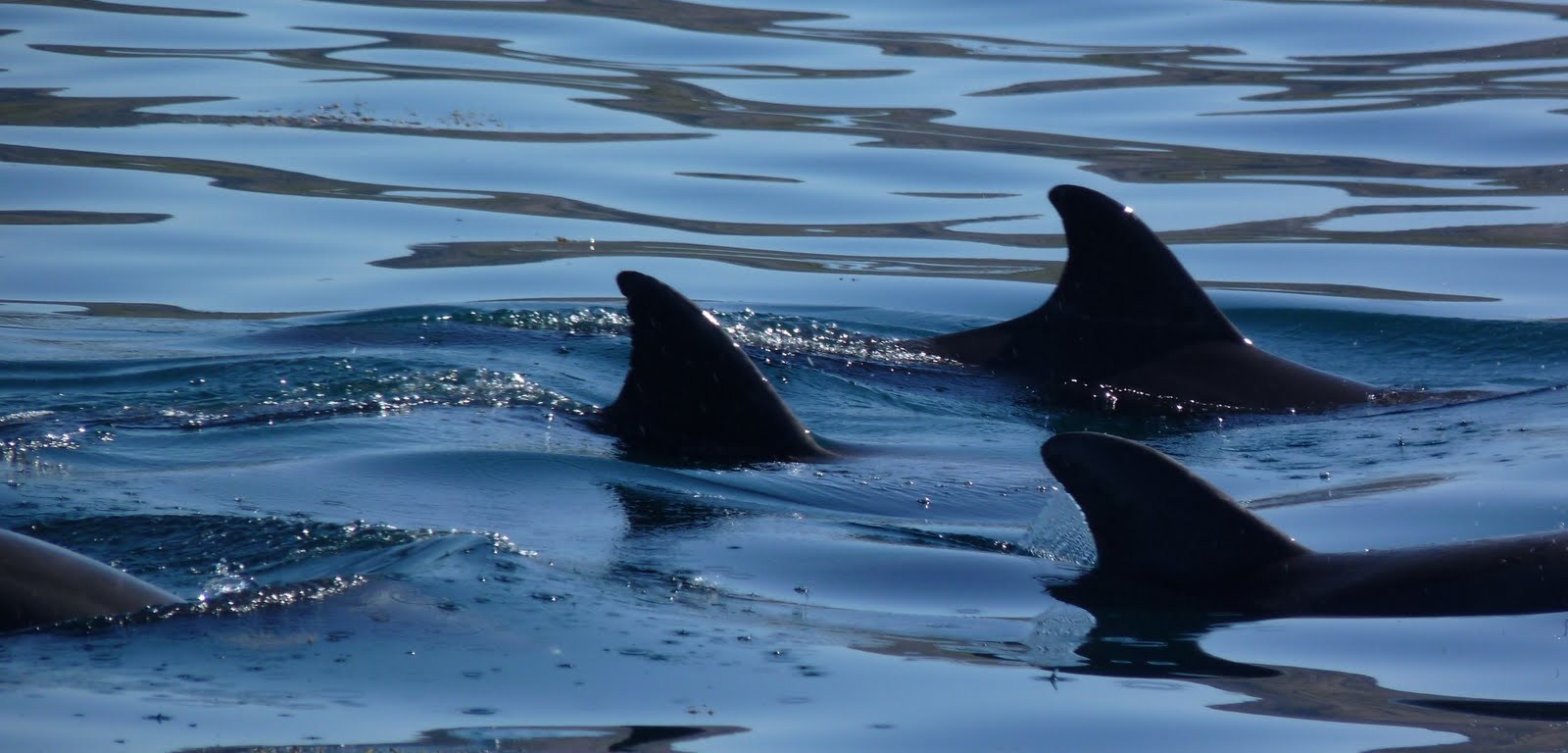
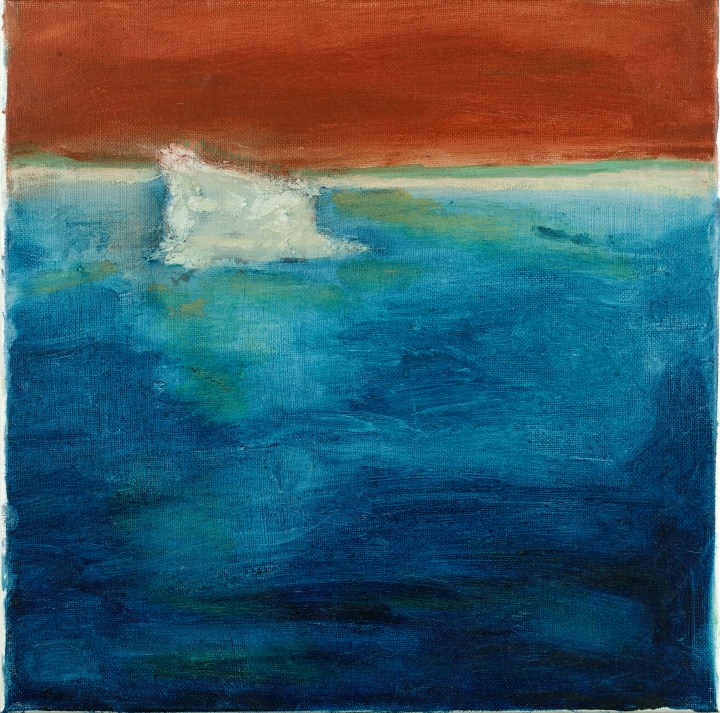
First, perhaps, because it is everywhere—in story, in song, in odd chance assemblages or strange coincidences. This too may surprise you: not every poem is made of words.
This is because, while poetry, like prayer, can be a medium of complacency or banality (think Hallmark greeting cards), or howling extremity (where do you turn when death or danger is at hand?), it is, most importantly, a practice and a space of intentional listening or attentiveness in and to the mysteries of life.
How, in the moment, as meaning eludes you, as it always does in ways both large and small, do you find hand holds or stepping stones or a rhythm of breath that marks where you are, even as you have the sense of being flung from the world, whether in love or joy or terror or wonder or horror or fear or confusion, by unceasing duty or a race against the clock or any number of other experiences and emotions?
I think about something striking I heard Canadian physician, writer and deep sea diver Joe MacInnis say recently in a discussion of the relationship between space travel and his own many voyages underwater, whether beneath the ice cap at the North Pole or into the depths where the Titanic lies:
I only wish that they would take more poets into space…
What? his interviewer asked, clearly astonished. Why?
Because those are the minds that really excite us… I think…of Marcel Proust [who said that] the only true discovery is not to [be the first to travel to new places], but to possess new eyes.
For MacInnis, poets are as essential as scientists in order to begin to make sense of novel geographies, which is to say, in the navigation of what is not yet imagined or known.
Outside of art school, contemporary culture doesn’t typically think this way. Poetry, like many other art forms, is regarded as an extra, dessert if you have time and the funds for it; the cherry on the sundae, not a fundamental or necessary mode of interrogation or relation.
But what do we lose in a world without poetry? History perhaps—oral poetry seems to be the oldest continuous literary form, and apparently the second oldest matter to be entered into writing, counts of grain stores and ledgers note commerce apparently coming first. But I think we also lose doubt, certain kinds of pauses, and a respect for practices of unknowing, of loss and forgetting, which no machine intelligence can have.
Proust’s famous claim about “new eyes” begins by musing on the importance of such practices of disorientation:
Each artist…seems…to be the native of an unknown country, which he himself has forgotten. . . .
Indeed, Proust argues, it is only by turning their back on what they think they know or remember that an artist can begin to make what will enable us to hear or to see in new ways. As he explains,
A pair of wings, a different mode of breathing, which would enable us to traverse infinite space, would in no way help us, for, if we visited Mars or Venus keeping the same senses, they would clothe in the same aspect as the things of the earth everything that we should be capable of seeing (my emphasis).
What matters is not to stake a claim to a particular geography, but to listen for what has not yet registered, and to break the pattern of what you think you (should) know. Or as Proust puts it, still insisting upon artists as deep sea divers or interstellar cosmonauts,
The only true voyage of discovery…would be…to behold the universe through the eyes of another, of a hundred others, to behold the hundred universes that each of them beholds, that each of them is…
In this way, he argues,
we do really fly from star to star.
The what and where of poetry is not a place, just as it is also not a style, so much as a way of tuning, of making a resonant space where body, experience and understanding may now and again chime together.
Opening yourself to such unforeseen resonances is, in the deepest sense, what it means to begin to voyage or look with new eyes, whether as artist, journey-poet or reader.
Or as one of my favourite poets, Solmaz Sharif, has said about her own practice of probing the impossible spaces of the doublespeak of war, death and border crossings:
Poetry is not a form of writing but of reading.
A way of thinking.
of being in the world….
I am looking for something that collapses the distance between
myself and what is being discussed.
That collapses time.
If poetry tosses us—like life itself—into places of not-knowing, it also binds us together in loss, celebration and story.
Listen,
We are knitted to each other and knotted to the world.
It sings through our bones.
Notes
I only wish that they would take more poets into space. Joe MacInnis in an interview with Matt Galloway, “From the Titanic to the North Pole: A Lifetime of Exploration,” The Current, CBC Radio, 5 January 2026, rebroadcast on 12 February 2026: https://www.cbc.ca/listen/live-radio/1-63-the-current/clip/16197593-from-titanic-north-pole-life-exploration
Each artist…seems…to be the native of an unknown country… Marcel Proust, The Prisoner (Volume 5 of Remembrance of Things Past), C. K. Scott Moncrieff, trans., 1929, Chapter 2.
Poetry is not a form of writing but of reading… Solmaz Sharif, “On Political Poetry and Documents,” Asian American Writers Workshop (November 2017): https://www.youtube.com/watch?v=_C88LYROgso
We are knitted to each other and knotted to the world. It sings through our bones. Karin Cope. Refrain from What Seas Sing Through Our Bones, (Lawrencetown Beach, NS: Pottersfield Press, 2026).
 Visible Poetry
Wow! You are a Solmaz Sharif fan! Thanks for the youtube URL. This is a fantastic quote/observation. Are you familiar with The Master’s House? Very musical with her use of repetition.
LikeLike
You’re so welcome. I love Solmaz Sharif, teach her work often and feel deeply indebted to her thinking. I will be writing more about her soon. Yes, yes, to The Master’s House–https://www.poetryfoundation.org/poetrymagazine/poems/146216/the-masters-house! Thanks for reminding me of this poem. So great to hear from you.
LikeLike